
Ph.D. Student
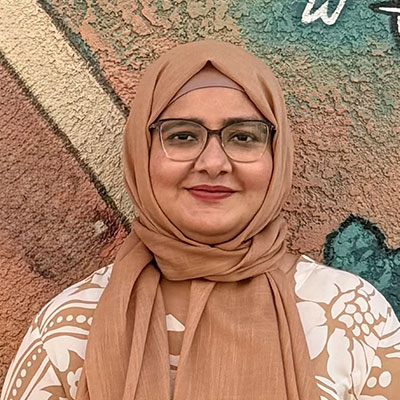
Fiza Mansoor
Education
M.S. in Water Sanitation and Health, U.S.-Pakistan Center for Advanced Studies in Water (USPCAS-W), Mehran University of Engineering and Technology (MUET), Jamshoro, Pakistan – 2020
B.S. in Microbiology, Sindh University, Jamshoro, Pakistan – 2017
Bio
Fiza is a Ph.D. student in Civil and Environmental Engineering at the University of Utah. Her research focuses on harmful algal blooms (HABs), emphasizing cyanobacteria’s ecological dynamics, toxin production, and biofilm behavior in freshwater systems such as Utah Lake and Zion National Park. She investigates how variations in nutrient availability and environmental stressors trigger the production of cyanotoxins, particularly microcystin (MCY) and anatoxin (ANA), under both planktonic and benthic growth forms. She is also working on cyanobacterial biofilm formation under varying hydrodynamic conditions, exploring how shear rate affects structural development and toxin expression within biofilms. Her work combines field sampling with controlled laboratory experiments. Through the integration of field monitoring, genomic tools, and analytical techniques, her work aims to develop early-warning systems and improve our understanding of how climate change, nutrient runoff, and urbanization drive HAB occurrence. Fiza’s research contributes to developing strategies to safeguard public and environmental health from cyanotoxins.

Tayyab Qureshi
Education
M.S. in Environmental Engineering, U.S.-Pakistan Center for Advanced Studies in Water (USPCAS-W), Mehran University of Engineering and Technology (MUET), Jamshoro, Pakistan – 2021
B.E. in Chemical Engineering, Quaid-e-Awam University of Engineering, Science and Technology, Nawabshah, Pakistan – 2018
Bio
Tayyab Qureshi is a Ph.D. student in Civil and Environmental Engineering at the University of Utah. His research focuses on the use of Granular Activated Carbon (GAC)-based migrating carriers in Moving Bed Biofilm Reactors (MBBRs) for the simultaneous removal of nutrients and emerging contaminants, including estrogenic compounds (EE2) and per- and polyfluoroalkyl substances (PFAS). By integrating experimental reactor studies with microbial community and molecular analyses, his work investigates the mechanisms of contaminant degradation, adsorption behavior, and the functional roles of biofilm-associated microorganisms. His research aims to enhance the design and sustainability of advanced wastewater treatment systems in response to the growing challenges posed by urbanization, climate change, and persistent pollutants.

Abeer Sohrab
Abeer Sohrab is a doctoral candidate in Environmental Engineering at the University of Utah. Her research explores the genomic and ecological factors behind harmful algal blooms (HABs). She focuses on benthic cyanobacterial mats dominated by Microcoleus in nutrient-limited freshwater systems. Using combined metagenomic and metatranscriptomic methods, she looks at how gene expression related to nutrient cycling and toxin production affects the survival and ecological success of both toxic and non-toxic Microcoleus strains. Her work, which focuses on river environments such as the Virgin River in Zion National Park, aims to enhance understanding of how benthic blooms form and help develop predictive models for harmful algal bloom (HAB) dynamics. Her other work includes studying surrogate pathogens in wastewater, specifically bacteriophages.
Graduate Student

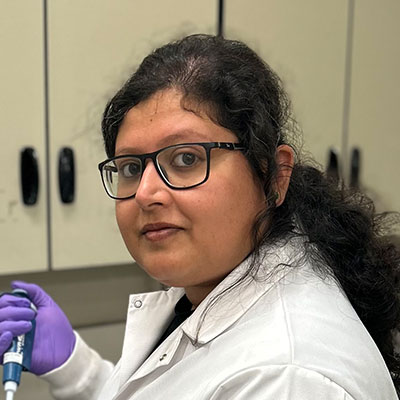
Vidisha Kashyap
My research focuses on the development and optimization of a Pure Oxygen Aerobic Granular Reactor (POx AGR) for enhanced nitrogen removal and granule formation in wastewater treatment. This involves building, operating, and monitoring a reactor system that uses pure oxygen to enhance granule stability and enrich functioning microbial populations. This research will contribute to the development of next-generation biological treatment technologies that are compact, energy-efficient, and able to remove a large amount of nutrients under a variety of operating situations.
The research explores how oxygenation strategies influence microbial ecology, granule morphology, and nitrogen transformation pathways. The performance of ammonia-oxidizing and nitrite-oxidizing bacteria over a range of pH and substrate concentrations is examined using batch tests, Monod kinetic modeling, and genetic analysis, which includes amoA gene quantification and 16S rRNA sequencing. Decoupling solids retention time (SRT) for various sludge sizes and figuring out how granules contribute differently to nitrification and denitrification than flocs are two main areas of study interest. The reactor’s performance is evaluated using parameters like total inorganic nitrogen (TIN) removal, oxygen uptake rate, and EPS/DNA analysis. Imaging techniques such as digital microscopy are used to assess structural integrity and microbial stratification within granules. This work has strong implications for reducing the carbon footprint of wastewater treatment plants and enabling compact design systems. By bridging microbial ecology with process engineering, this research supports the broader goal of sustainable and resilient water infrastructure.
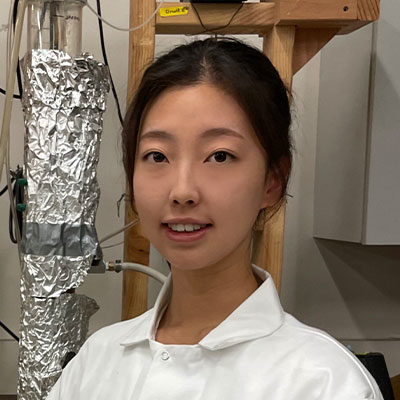
Wona Kim
Research and its Significance
Microbial processes are at the core of sustainable wastewater treatment, particularly those involving anaerobic oxidation of methane coupled to nitrogen removal. My research focuses on the enrichment and characterization of Denitrifying Anaerobic Methane Oxidation (DAMO) archaea and bacteria, and their interaction with anammox bacteria. These microorganisms work together to convert methane, nitrate, nitrite, and ammonium into harmless nitrogen gas under anaerobic conditions. Lab-scale bioreactors are used to study how DAMO and anammox microbes interact and process nitrogen compounds, with the goal of developing energy-efficient reactor designs. This work contributes to a deeper understanding of microbial synergy and offers innovative strategies for reducing greenhouse gas emissions and resource consumption in wastewater treatment systems. Ultimately, the research aims to bridge microbial ecology with engineering applications for more sustainable environmental management.